Good Girl Gone Bad
Play Good Girl Gone Bad
Good Girl Gone Bad Screenshots









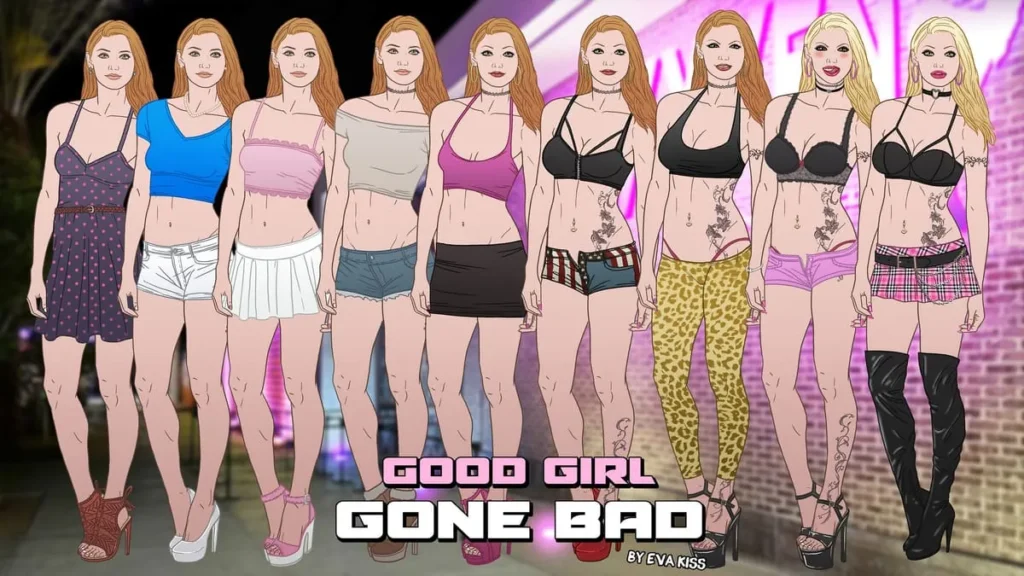




Good Girl Gone Bad review
Master the branching storyline, character relationships, and endings in this adult visual novel
Good Girl Gone Bad is an adult visual novel that puts you in control of Ashley’s destiny through meaningful choices that shape her character arc and story outcomes. This interactive narrative experience combines hand-crafted artwork with complex branching storylines, allowing players to explore morally ambiguous decisions and their consequences. Whether you’re interested in understanding the game’s mechanics, discovering hidden scenes, or achieving specific endings, this guide covers everything you need to know about navigating Ashley’s journey from good girl to something far more complicated.
Understanding Good Girl Gone Bad: Game Overview & Core Mechanics
So, you’ve clicked on Good Girl Gone Bad, intrigued by the title or maybe the stunning hand-drawn art. But now you’re staring at the start screen, wondering what you’re really in for. Is it just a simple story, or something more? Let me tell you from experience: this isn’t a game you just watch. This is a world you shape, one tantalizing, terrifying, and thrilling choice at a time. Forget passive storytelling; here, your cursor is a catalyst for chaos, connection, and profound change. 🎭
The magic—and the mastery—of this experience lies in understanding its core systems. Think of it like learning the rules of a new, incredibly expressive language. Once you grasp the Good Girl Gone Bad gameplay mechanics, you stop feeling like a passenger and start feeling like the pilot, even when the narrative turbulence hits. This chapter is your co-pilot’s manual. We’re breaking down everything from Ashley’s fragile psyche to the intricate web of relationships, all to show you how your smallest whim can rewrite an entire life. Buckle up.
What Makes This Visual Novel Unique
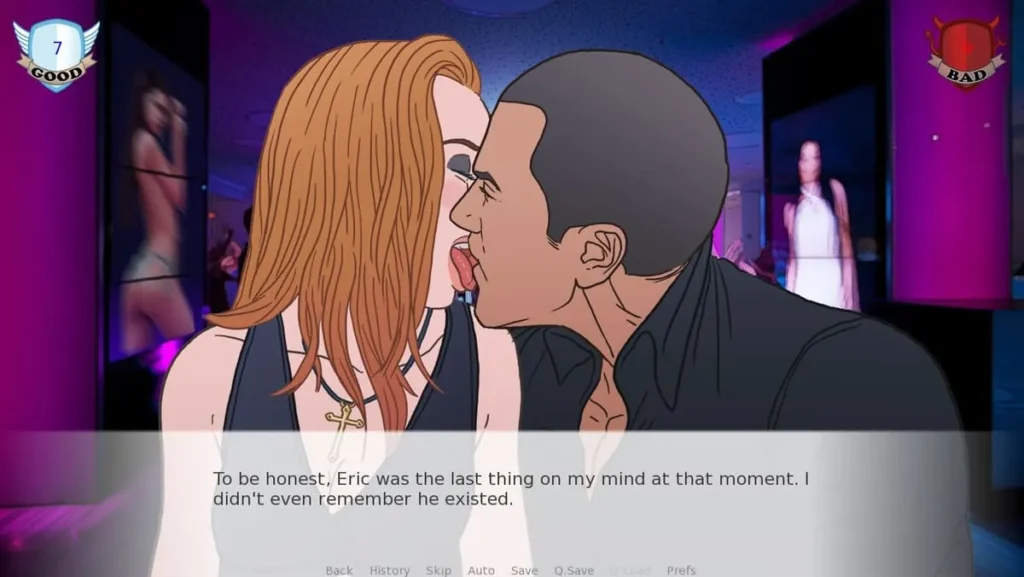
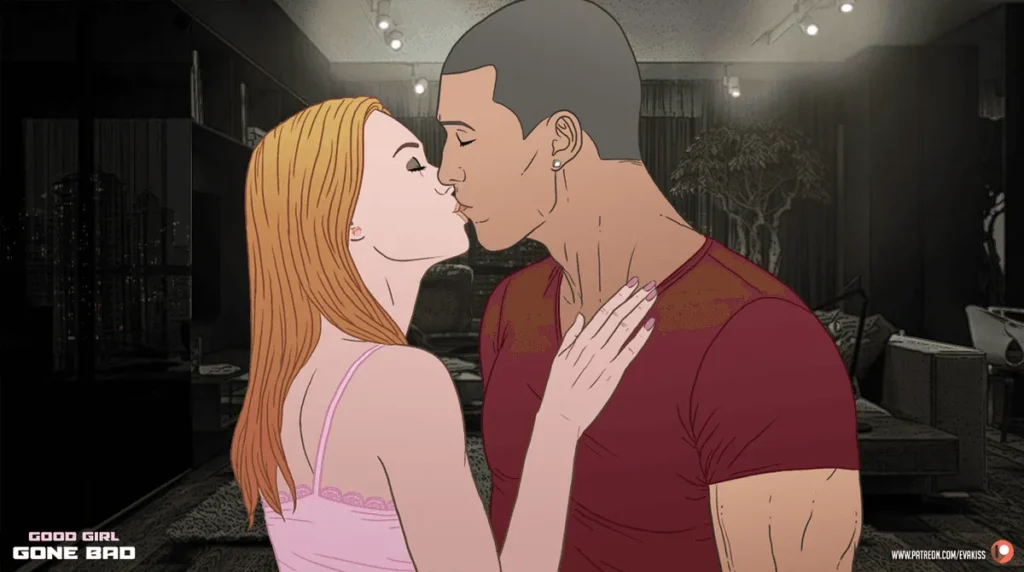
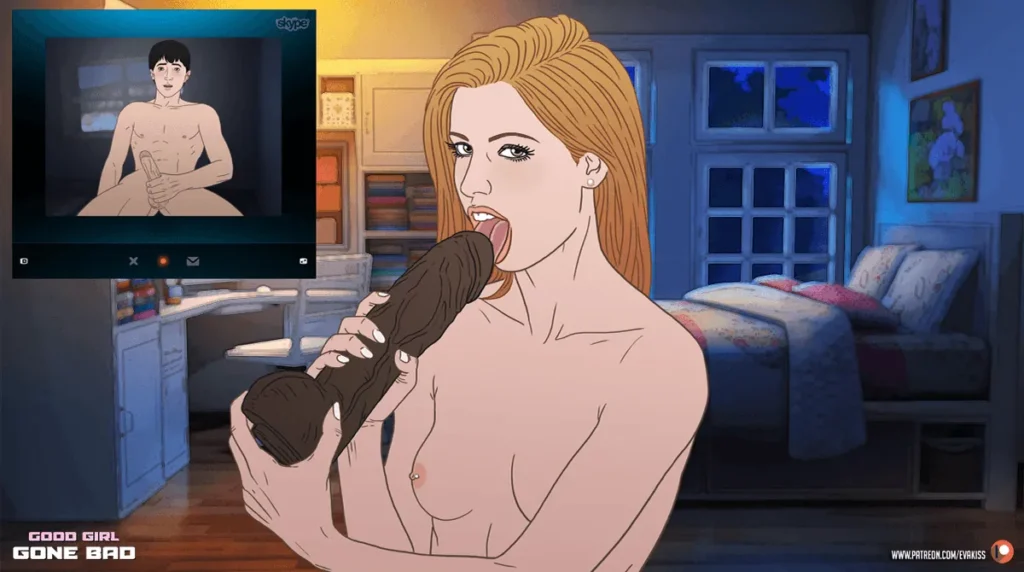
Right off the bat, Good Girl Gone Bad stands out in the crowded visual novel space, and it’s not just because of its adult themes. The first thing you’ll notice is the art. In a genre often dominated by 3D models or anime-inspired sprites, this game boasts fully hand-drawn assets. Every character, every background, every expressive nuance is crafted with a distinct, almost illustrative style. This isn’t just aesthetic; it creates an intimate, personal connection. You’re not looking at a generic model—you’re looking at Ashley, with her specific freckles, her uncertain smiles, and her evolving wardrobe that mirrors her inner journey. The art grows with the story, visually reinforcing the Ashley character development in a way pre-rendered models rarely can.
But the true heart of its uniqueness is its philosophical approach to choice. Many games offer the illusion of branching paths, but here, the visual novel branching storyline is the entire point. There is no single “correct” story. The game is built on a foundation of “what if?” scenarios that are astonishingly far-reaching. I remember on my first playthrough, I made what I thought was a minor, flirtatious choice at a party. Hours later, that decision had silently closed off an entire friendship arc and unlocked a risky business opportunity I didn’t even know existed. The game doesn’t just remember your choices; it weaves them into the fabric of the narrative, creating a story that feels genuinely yours.
This leads to the golden rule of this game: interactive narrative choices matter. They aren’t just dialogue flavor. They are mechanical inputs that adjust hidden variables, lock and unlock narrative threads, and ultimately determine who Ashley becomes. Will she cling to her comfortable, “good girl” persona? Will she rebel explosively? Or will she craft a more nuanced, empowered identity somewhere in between? The game tracks this through a subtle but powerful points system, nudging her alignment between societal approval and personal desire. This isn’t a simple good vs. evil meter; it’s a complex reflection of her shifting priorities and morality. Understanding this is key to any Good Girl Gone Bad endings guide, as your ending is the final sum of every point you’ve earned.
Character Development & Relationship Systems
At the center of this storm is Ashley, our protagonist. She isn’t a blank slate. She begins with a defined history, insecurities, and social pressures—a relatable foundation that makes her transformation so compelling. Your role isn’t to create her from nothing, but to guide her reactions to a world that’s suddenly offering very different options. The Ashley character development is the core narrative engine. Every choice you make either reinforces her initial worldview or challenges it, and the game does a brilliant job of reflecting this in her internal monologue, her dialogue with others, and even her posture in the artwork.
Your primary tool for influencing Ashley is through the game’s sophisticated relationship system adult game. This isn’t a simple “affection” score. Each major character has their own relationship meter with Ashley, and this level dictates everything:
* What scenes you can access.
* What dialogue options appear during key conversations.
* The tone and outcome of intimate encounters.
* Even the availability of certain plot-altering favors or conflicts.
For example, building a close, trusting relationship with her best friend might open up supportive scenes and safe havens. Conversely, pursuing a secret, risky liaison with a authority figure will open a completely different, clandestine path fraught with its own rewards and dangers. You can’t max out everyone’s relationship in one run—choices with one character often impact your standing with another, creating a dynamic, living social web. This system ensures that the relationship system adult game is less about collecting romance options and more about navigating the complex, often messy, human connections that define our lives. 👥
Pro Tip from My Playthroughs: Don’t try to “game” the system on your first run. Pick a character or a vibe (e.g., “rebelious Ashley” or “career-driven Ashley”) and lean into choices that align with that path. The most rewarding stories come from committed, if flawed, role-playing.
How Choices Impact Your Story Progression
This is where the rubber meets the road. The Good Girl Gone Bad gameplay mechanics are all about cause and effect. The game excels at creating moral choices consequences that are both immediate and delayed. An early, seemingly innocent decision to skip a study session to hang out with a new crowd doesn’t just affect your grade later; it can determine who offers you a job, who vouches for you in a crisis, and which partners find you “their type.”
Let’s talk about the visual novel branching storyline in practical terms. The game’s structure is less a “branching tree” and more a “narrative river with countless tributaries and dams.” Early choices determine which major story arcs you even have access to (the dams), while later choices within those arcs determine the specific scenes, dialogues, and outcomes (the tributaries). A choice in Chapter 2 might not change Chapter 3 dramatically, but it may completely alter the landscape of Chapter 7, presenting you with options that would be literally impossible on a different path.
To visualize this cascade effect, let’s look at how specific early-game moments can ripple through your entire save file. The table below breaks down a few critical early junctions. Remember, these are just examples—the actual web is far more intricate! 🕸️
| Early Game Choice (Chapter 1-2) | Good/Bad Points Impact | Relationship Effects | Mid-to-Late Game Consequences & Available Scenes |
|---|---|---|---|
| Accepting a drink from a charismatic stranger at the first party. | Significant shift toward “Bad” points. | +Major increase with the stranger’s social circle. -Decrease with cautious friends. Unlocks flirtatious options with new characters. | Unlocks the “Party Circuit” arc. May lead to exclusive job offers in nightlife or modeling. Can close off “Academic” or “Traditional Career” paths. Drastically alters available endings related to independence and reputation. |
| Choosing to cover for a friend’s mistake at work. | Moderate shift toward “Good” points (loyalty). | +Major increase with that friend, building a strong ally. +Slight increase with others who value loyalty. | Unlocks the “Loyal Crew” storyline. This friend may offer crucial help or a place to stay during a future crisis. Can lead to endings focused on friendship and community over individual ambition. |
| Investing time in studying or a personal hobby instead of socializing. | Small shift toward “Good” points (discipline). | Stagnant or decreasing relationships with social characters. Potential increase with mentors or like-minded individuals. | Unlocks “Skill-Based” opportunities (e.g., art sales, freelance work). Provides a stable fallback option during turbulent times. Leads to endings where Ashley’s success is built on personal merit and craft. |
| Flirting with or rejecting a supervisor/authority figure’s advance. | Rejecting: +Good. Accepting: +Bad. | Rejecting: Creates tension/unlocks potential “overcome adversity” path. Accepting: Unlocks a secret, power-imbalanced relationship path. | Defines Ashley’s approach to power dynamics. Accepting can unlock shortcuts and luxury but at high risk and emotional cost. Rejecting may force a harder, more independent grind but preserves different romantic options and self-respect narratives. |
As you can see, the moral choices consequences are deeply woven into the interactive narrative choices matter design. There is rarely a “right” answer, only a “different” story. This makes subsequent playthroughs not a chore, but a revelation. Playing as a cautious Ashley after a rebellious run feels like experiencing a completely different game, with new characters taking center stage and familiar scenes carrying opposite emotional weights.
Mastering this is the true path to every ending. A comprehensive Good Girl Gone Bad endings guide isn’t just a list of final scenes; it’s a map of these interconnected choices. Whether you’re aiming for an ending of corporate power, artistic fulfillment, liberated hedonism, or reconciled stability, it all traces back to these foundational moments. Your story is waiting to be written—one deliberate, delicious, or devastating click at a time. Your only job is to decide who Ashley will be when the final page turns.
Good Girl Gone Bad delivers a sophisticated adult visual novel experience that rewards player engagement with meaningful consequences and diverse narrative paths. By understanding the game’s choice system, progression mechanics, and relationship dynamics, you can craft Ashley’s story to match your preferred playstyle—whether that means maintaining her good girl image or embracing a more adventurous path. The game’s hand-drawn art style and complex branching narrative create an immersive experience where every decision matters, making multiple playthroughs worthwhile as you discover new scenes, character interactions, and endings. Whether you’re seeking specific outcomes or simply exploring the game’s possibilities, mastering these systems ensures you get the most from your experience with this unique interactive narrative.