Corruption Time
Play Corruption Time
Corruption Time Screenshots
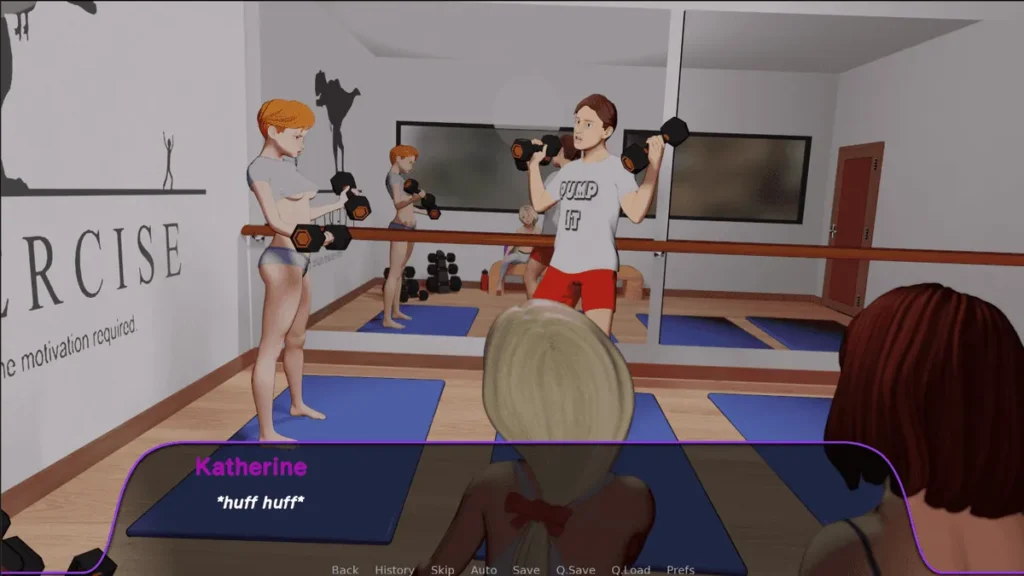

Corruption Time review
Master the mechanics, storyline, and character interactions in this adult visual novel
Corruption Time stands out as an engaging adult visual novel that combines narrative depth with player choice mechanics. This game challenges players to navigate complex relationships, make meaningful decisions, and experience branching storylines that respond to their choices. Whether you’re new to the genre or a seasoned player, understanding the core mechanics and character dynamics will enhance your gaming experience. This guide provides everything you need to know about progressing through Corruption Time, unlocking special scenes, and maximizing your gameplay potential.
Understanding Corruption Time Game Mechanics and Core Systems
So, you’ve started playing Corruption Time and you’re staring at the screen, a little overwhelmed. 😅 You’ve got a clock ticking down, multiple locations to visit, and character stats that seem to move at a glacial pace. I’ve been there. My first playthrough was a mess—I spent days just chatting in the park, completely missing the fact that certain characters only show up at the library after dark. I ended up with a wholesome friendship simulator when I was aiming for something… decidedly less wholesome. Let’s make sure that doesn’t happen to you. This guide is here to peel back the layers of Corruption Time game mechanics, transforming confusion into a master plan. 🎮
At its heart, Corruption Time is a game of delicate balance and strategic choice. Every click matters, every location visited is an opportunity cost, and every dialogue option feeds into a complex web of progression. Mastering this isn’t just about clicking through; it’s about understanding the engine under the hood. We’ll break down the point system visual novel fans love (and sometimes love to hate), the time management gameplay that gives the game its pulse, and the secrets to unlocking scenes Corruption Time hides behind its branching paths. Get ready to move from passive player to puppet master.
How the Point System Works in Corruption Time
Forget everything you know about simple “like” meters. Corruption Time employs a brilliant and ruthless dual-point system that tracks two independent yet often interconnected aspects of your relationship with each character. This isn’t just a “good cop, bad cop” slider; these are two separate currencies you must earn and spend wisely to guide the narrative.
Think of it this way: Affection is the foundation of trust. It’s built through kindness, helpfulness, and genuine connection. A high Affection score means a character trusts you, seeks you out, and sees you as a confidant. On the other side is Corruption. This measures the erosion of their inhibitions, their willingness to cross lines, and their acceptance of more morally ambiguous or explicit situations. You don’t corrupt someone who hates you—you need that foundation of Affection to make the Corruption stick. 😈
These points are earned through branching narrative choices. A polite compliment might give +2 Affection. A subtly suggestive remark might give +1 Affection and +1 Corruption. A blatantly lewd comment might give -1 Affection but +3 Corruption. The game is constantly evaluating your tone and intent. Furthermore, performing specific actions or giving gifts at the right time can yield big point bonuses. The key insight? Character relationship progression is gated behind thresholds in both stats. You might need Affection 20 and Corruption 15 to unlock a crucial private conversation that opens a new story branch.
Here’s a practical table to visualize how this core point system visual novel mechanic works:
| Point Type | How It’s Typically Earned | What It Unlocks |
|---|---|---|
| Affection | Kind dialogue, helpful actions, remembering personal details, giving “pure” gifts. | Deeper conversations, access to personal spaces, trust-based story events, romantic (vanilla) scenes. |
| Corruption | Suggestive dialogue, encouraging risky behavior, giving “tainted” gifts, exposing them to corrupting influences. | Secret meetings, taboo conversations, risqué scenes, and the game’s signature “corrupted” storyline endings. |
| Combined Thresholds | Reaching specific numeric values in BOTH Affection and Corruption scores. | The most pivotal story scenes, major narrative branches, and character-specific endings. |
My personal “aha!” moment came with the character of Elena. I maxed out her Affection early, thinking I was on the fast track. But her story stalled because her Corruption was at zero. I had to literally backtrack and be a jerk to my sweet, trusting virtual friend to progress. It felt awful, but it taught me the golden rule of Corruption Time game mechanics: you must consciously cultivate both sides of the coin. Balance is not the goal; strategic imbalance is.
Navigating Locations and Time Management
If the point system is the game’s brain, then the time management gameplay is its beating heart. You are not given unlimited time. Each day is a precious resource divided into segments (like Morning, Afternoon, Evening), and choosing where to go—and when—is the single most important decision you make each turn. ⏰
Locations are not just static backdrops. They are dynamic stages where characters appear on strict schedules. The school courtyard might be bustling with students in the afternoon but empty and eerie at night. The local bar may be closed in the morning but become the hub for advanced, corruption-heavy interactions in the evening. This is where a guide becomes invaluable. Wasting an evening turn visiting an empty location is a major setback.
The gameplay loop is a satisfying puzzle:
1. Check Your Objectives: What scene are you trying to unlock? Which character’s character relationship progression do you need to boost?
2. Consult Mental Schedules: (Or a notepad—I highly recommend taking notes!). Know that Sarah is always at the cafe after school, while Mr. Donovan only lurks at the gym in the evenings.
3. Plan Your Route: Map out your day to intersect with your target characters. Sometimes you can see two in one day; sometimes you must choose.
4. Execute and Adapt: Some interactions will give you new information, like “Clara mentioned she visits the abandoned church on Saturdays.” This opens up new scheduling options!
Pro Tip: Don’t just chase one character. Often, progressing with Character A requires you to learn a piece of information from Character B at a specific location and time. This interweaving of schedules is what makes the time management gameplay so deeply engaging. It feels less like a grind and more like solving a mystery.
My biggest early mistake was ignoring “down time” locations like the protagonist’s own home. I later discovered that certain events, like receiving phone calls or unlocking diary entries that provide crucial clues, only trigger if you spend an evening at home. It’s not wasted time; it’s essential processing time for the narrative. Treat every location as a tool with a specific purpose.
Unlocking Special Events and Hidden Scenes
This is the payoff. All that point farming and meticulous scheduling culminates in unlocking scenes Corruption Time is famous for. But not all scenes are created equal, and understanding the difference is key to efficient play. We can break them into three categories: Story Milestones, Repeatable Events, and Hidden Scenes.
Story Milestones are the one-time, major narrative beats. They are the direct result of hitting those Affection/Corruption thresholds we discussed. These scenes are typically longer, feature unique artwork, and advance the main plot. Once triggered, they are permanently logged in your gallery. The branching narrative choices within these scenes are often critical, locking or unlocking entire future pathways.
Repeatable Events are the bread and butter of point farming. These are the smaller interactions—meeting a character at their usual haunt, having a standard conversation. You can do these multiple times to gradually grind up your points. However, their point yield often diminishes after the first few times, or they may require specific conditions (e.g., “only after Corruption > 10”). This is your core gameplay loop for shaping stats.
Hidden Scenes are the crown jewels. 🤫 These are triggered by obscure, non-obvious sequences of actions. Examples from my playthroughs include:
* Visiting a location at a very specific time after seeing another event but before talking to a third character.
* Having a precise set of stats with multiple characters simultaneously.
* Making a seemingly inconsequential “wrong” choice earlier in the game that opens up a unique path later.
To strategically unlock scenes Corruption Time hides away, you must shift from a linear mindset to a branching one. Save often, especially before major choices. Experiment with “failure” paths—sometimes saying the rude thing or missing an appointment opens a door you didn’t know existed. The game rewards curiosity and sometimes even punishes perfection.
Here’s a piece of actionable advice that revolutionized my efficiency: Focus on a “grind day” pattern. Identify a day in the game’s weekly cycle (like a Monday) where several of your target characters are available in sequence. Save at the start of that day. Then, play through it optimally to maximize points. If you’re aiming for a specific scene, reload and tweak your choices—did choosing the library over the park give you the +1 extra Corruption you needed? This methodical approach is far better than wandering aimlessly day after in-game day.
Frequently Asked Questions (FAQ)
Q: I’m stuck! My points with a character haven’t moved in days. What am I doing wrong?
A: This is almost always a time management gameplay issue. You’re likely visiting them at the wrong time or missing a prerequisite. Double-check their schedule across all time slots. Also, ensure you’ve triggered the necessary story milestone with another character that opens up new dialogue options. Progression is often a chain reaction.
Q: Can I max out both Affection and Corruption with everyone in one playthrough?
A: Technically, maybe, but it’s incredibly difficult due to the limited time and the conflicting nature of some choices. Corruption Time is designed for multiple playthroughs. Embrace this! Your first run should focus on learning schedules and following one or two character paths deeply. Subsequent runs let you use your meta-knowledge to engineer specific outcomes.
Q: How do I know if I’m on the right path for a specific ending?
A: Pay close attention to the narrative tone in key scenes. Are characters becoming more dependent and submissive? That’s a corruption path. Are relationships becoming more traditionally romantic? That’s a high-affection path. Also, check your stats menu frequently. If you’re aiming for a “Fully Corrupted” ending but your Corruption is half your Affection, you need to radically shift your interaction style.
Q: Are there missable one-time events?
A: Absolutely. Many events are tied to a specific window—a certain day, before or after a story beat, or while your stats are in a precise range. If you pass that window without meeting the conditions, that event is gone for that playthrough. This is why a repeatable events guide mindset is useful: know which events are safe to grind and which are unique milestones to save for.
Mastering Corruption Time game mechanics is what transforms it from a simple visual novel into a deeply engaging strategic experience. It’s the difference between watching a story unfold and architecting it yourself. By understanding the nuanced point system visual novel framework, commanding the time management gameplay, and strategically unlocking scenes Corruption Time has to offer, you hold the strings. Now go forth—plan, corrupt, save, reload, and most importantly, enjoy the beautifully twisted stories you create. Your perfect (or perfectly imperfect) playthrough awaits.
Corruption Time offers a rich interactive experience that rewards thoughtful decision-making and strategic planning. By understanding the point system, character dynamics, and progression mechanics, you can craft a personalized gameplay journey that aligns with your preferences. Whether you’re focused on specific character relationships, exploring all available content, or discovering hidden scenes, the strategies outlined in this guide will help you navigate the game effectively. Take your time exploring different choices, experiment with various progression paths, and enjoy the narrative depth that makes Corruption Time engaging for players seeking complex adult visual novel experiences.